

Effective teaching and learning come from relationships. Education is about building rapport with a diverse population of students, engaging with them, and connecting them to course material and concepts. The education process is a journey. With me steering the metaphorical ship, the process builds relationships and trust that carry through the educational experience. The students and I are on the same journey; we’re going to the same place. I’m just the one who’s steering because I’ve been there before, and I know the way.
Engaging students with vibrant and colorful lectures, interactive projects, and small-group work helps to bring material to life. Teaching content like philosophy and theology demands an approach that is not only informative, but entertaining. A level of theater makes material accessible to students of all learning styles. It’s about inserting humor, using video and music, and playing games to make the material come to life in a tangible way. Philosophy and theology are deep, complex, and rich topics. Students’ initial intimidation is an opportunity to demonstrate the value of these essential disciplines.
As such value is revealed, a teacher must be prepared to field a wide variety of questions—some on topic, some a bit off—and dispel misconceptions which can be barriers to the teaching and learning process. My teaching methods encourage students to ask those questions knowing I will help them uncover the answer.
One of the most time-honored teaching techniques is the Socratic Method. Named for its founder/creator, this inquisitive dialectic process was instituted by Socrates in fourth century BC. It is, in my opinion, the best way to engage, interact, and connect with students. The process of asking probing questions which trace the line of a person’s logic and reason reveals what he or she really understands about a topic and what innate biases might be present.
The Socratic Method is an effective way to lead one who has misconceptions to the root of their understanding and the misinformation or disinformation they have been served. This essentially gets a student to the point of understanding—or at least questioning—why he or she believes what he or she believes.
Another method for fielding those questions and countering common and uncommon myths is through presentation of research. Good philosophy and theology teachers lead students to credible primary sources for real facts. Once the reality is revealed to the student, the Socratic Method can trace the misunderstanding: two teaching moments in one.
Leading students to understanding, to facts, to resources means engaging them with media and technology in addition to the using the Method. Students are immersed in technology every day, so I use that tech—which is comfortable for them—to push them out of their comfort zones. I push them to digital resources like the Catechism of the Catholic Church, the Internet Encyclopedia of Philosophy, credible YouTube channels like Crash Course Philosophy, academic databases, and scholarly journals. This all comes from what we uncover in the Socratic process.
Finally, I offer my real self to my students. They know me as educated, practicing, approachable, real, and not all-knowing.
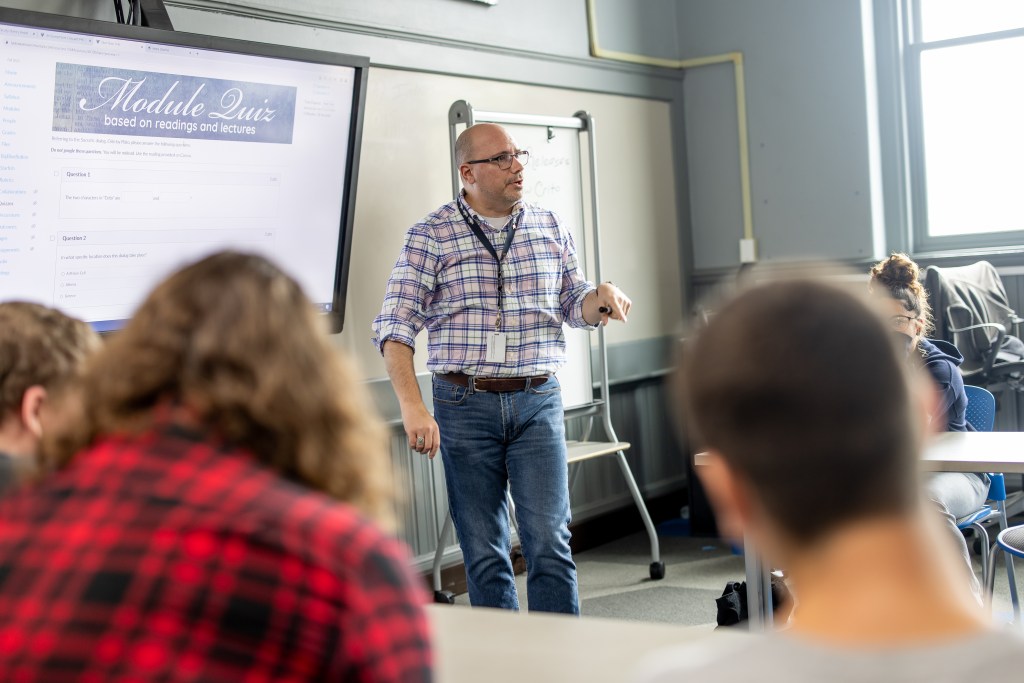
 #ProfessorJohn